

- DC fast charging (Level 3) delivers power directly to the EV battery without conversion in the vehicle, enabling significantly faster charging than AC Level 2.
- Fast chargers deliver 50 to 150 kW. Ultra-fast chargers deliver 150 kW and above, capable of adding hundreds of kilometres of range in under 30 minutes.
- DC charging costs more per kWh than AC but is the right choice for long journeys, rapid fleet turnarounds, and drivers without home charging.
- CCS2 is the dominant connector standard in Europe, compatible with the vast majority of new EVs.
DC fast charging is what makes the electric car practical for the journey, not just the commute. Here is what drivers need to know about how it works, what it costs, and when to use it. For the operator-side overview of managing DC networks, see our DC charging glossary entry.
Why is DC charging so much faster than AC?
The difference comes down to where the electricity is converted. Every EV battery stores direct current (DC). When you charge from an AC source, the vehicle's onboard charger converts the power from AC to DC before it reaches the battery. That process takes time and limits how quickly power can flow.
A DC charging station does the conversion inside the unit, not the car. It delivers already-converted DC power directly to the battery at much higher voltages. That is why DC chargers can add hundreds of kilometres of range in the time it takes to have a coffee.
Fast vs ultra-fast: what is the difference?
Not all DC chargers are equal. There are two practical tiers:
- Fast (50 to 150 kW): found at retail parks, urban charging hubs, and many public sites. A 30 to 45 minute stop will typically add 150 to 250 km of range depending on the vehicle.
- Ultra-fast (150 kW and above, up to 350 kW+): found primarily on motorway corridors. Capable of adding 100 km of range in as little as 8 to 10 minutes on compatible vehicles.
It is worth noting that charging speed is limited by whichever is lower: the charger's output or the vehicle's maximum intake rate. Plugging a 350 kW charger into a car rated for 100 kW will still only deliver 100 kW.
How much does DC fast charging cost?
DC charging is more expensive per kWh than AC, reflecting the higher hardware costs and the premium for speed. Pricing varies by operator, location, and time of day, and is increasingly dynamic. Most public DC chargers in Europe price per kWh, with some adding a session or connection fee on top.
For a detailed breakdown of how DC charging is priced and what affects the cost at the pump, see our fast charger pricing guide.
Which connector do I need?
In Europe, the vast majority of new EVs use CCS2 (Combined Charging System Type 2), which supports both AC and DC charging through a single port. If you bought a new EV in Europe in the last few years, you almost certainly have CCS2.
Some older vehicles use CHAdeMO (common in older Nissan and Mitsubishi models). CHAdeMO chargers are becoming less common as the industry consolidates around CCS.
When should you use DC charging?
- Long-distance journeys: the primary use case. Stop for 20 to 30 minutes at a motorway charger and continue with a meaningful range top-up.
- Commercial fleet turnarounds: taxis, delivery vans, and high-mileage vehicles use DC charging between shifts to stay operational.
- No home charging available: for EV owners in apartments or without a dedicated parking space, a regular DC fast charge session can substitute for overnight AC charging.
One thing to keep in mind: frequent DC fast charging puts slightly more strain on a battery than regular AC charging. Most manufacturers recommend using DC as needed rather than as your primary charging method if you have AC available at home or work.
Finding DC chargers on the road
Spirii Go gives drivers live visibility of charge point availability across a roaming network of over one million charge points in Europe, including DC fast chargers. Download Spirii Go or find out more about the app.
Explore market insights and operate your charging business effectively with our resources.
Related articles

Fleets that go electric usually start with one question: do we have enough power? But once that constraint is solved, another tends to take its place. In my role at Spirii, I work with fleet operators deploying and scaling truck charging, including Daimler Truck on the TruckCharge Network. Below are six questions I see emerging as fleets scale. Each one helps explain why the right charging setup today might not be the right one tomorrow.
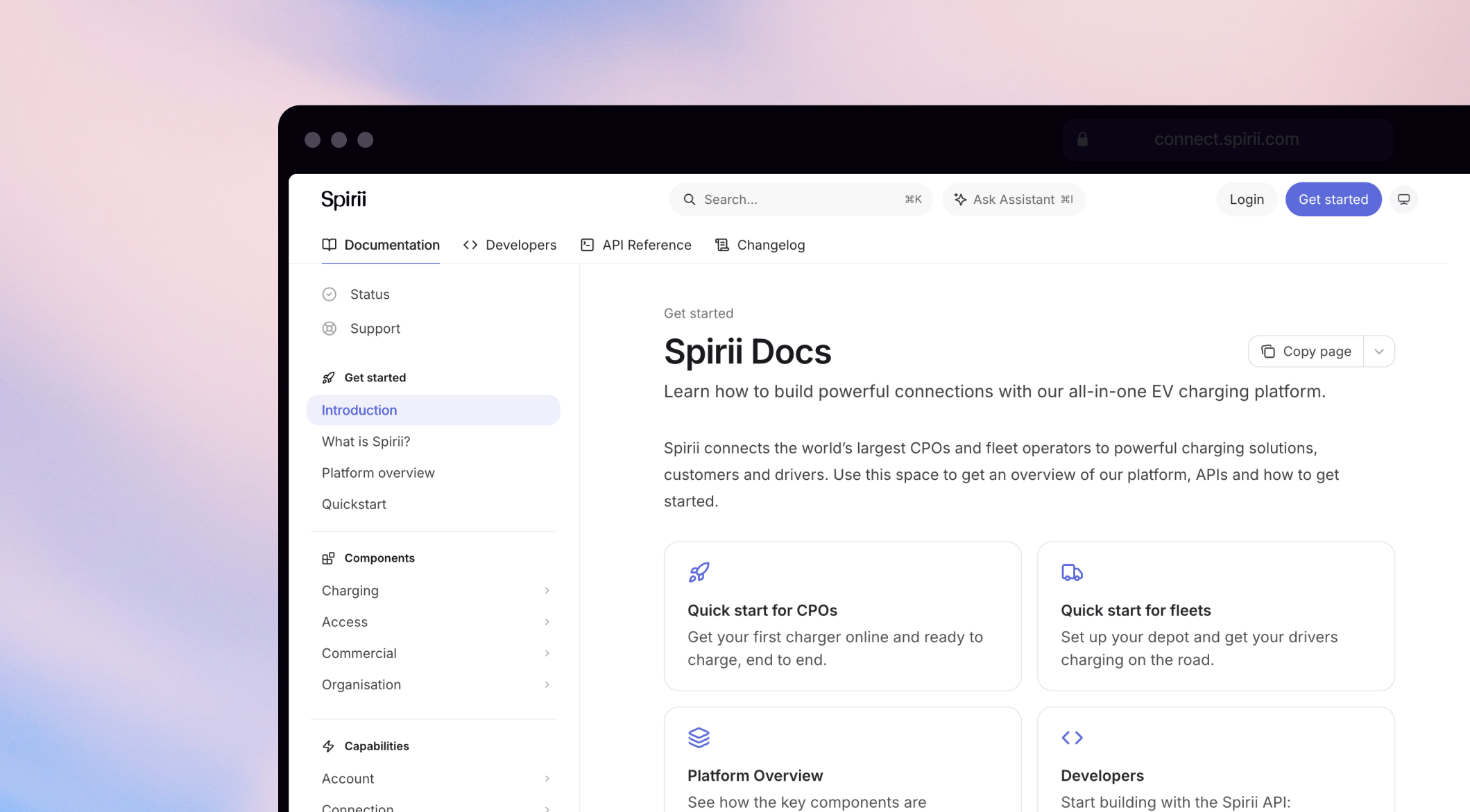
We just launched Spirii Docs, a single home for everything you need to know about Spirii's platform and our public APIs.

With Price Optimised Charging, the system finds the lowest electricity prices within your charging window and schedules accordingly – so your energy costs go down without any extra work on your end. Vehicles are always ready when you need them.